
Five inconsequential decisions that can wreck your next appeal
Strategy gets the love. Tactics get the money in.

There is strategy. And there are tactics.
People love strategy. Or they love saying strategy. But tactics are like the forgotten sandwich at the buffet, slowly curling up in the corner.
Tactics matter though, and the wrong ones can destroy a carefully constructed strategy. Fundraising is full of people who’ll happily sign off a six-figure media spend, then casually torch the response rate over something so apparently inconsequential that nobody was even asked to check it. The big strategic choices get scrutinised to death. The tweaks sail through on vibes - as my daughter might say. And then the appeal underperforms and everyone blames the strategy or the economy or the agency or something else.
So here are five tiny decisions that can rip a huge hole in your response rate and your income. All are real. All come from tests on banker creative. All are repeated far too often.
1. Swapping the signatory
Someone thinks “let’s mix it up this time. People must be sick of hearing from the CEO.” So the Head of Programmes signs instead. Congratulations, you’ve just halved your response rate. I’ve watched it happen. Donors give to people they trust, not to org charts. The signatory isn’t a branding decision. It’s the relationship. When you feel you have a relationship with someone, being handed off to someone else without explanation can be really upsetting. And that matters even more with mid-value donors. Of course, a frontline worker or even a beneficiary can absolutely work as a signatory. But just make sure the voice of the relationship-holder is still in there somewhere. They anchor the connection far more than many fundraisers realise.
2. Changing the ask amount to suit the price point, not the proposition
This is the one that makes me want to lie down. The lead ask “needs” to be illustrated with a different example of work, so someone goes hunting for something that costs £50. They find something – £50 can run an activity day for a group. But that sits next to a £30 prompt asking the donor to provide a night’s accommodation for a homeless young person. Guess which one the donor picks? You’ve just dragged your average gift down because the lower one is emotionally unbeatable. The ask has to earn its price tag. The price tag doesn’t get to pick the ask.
3. Making it urgent. Again. For the fourteenth time this year.
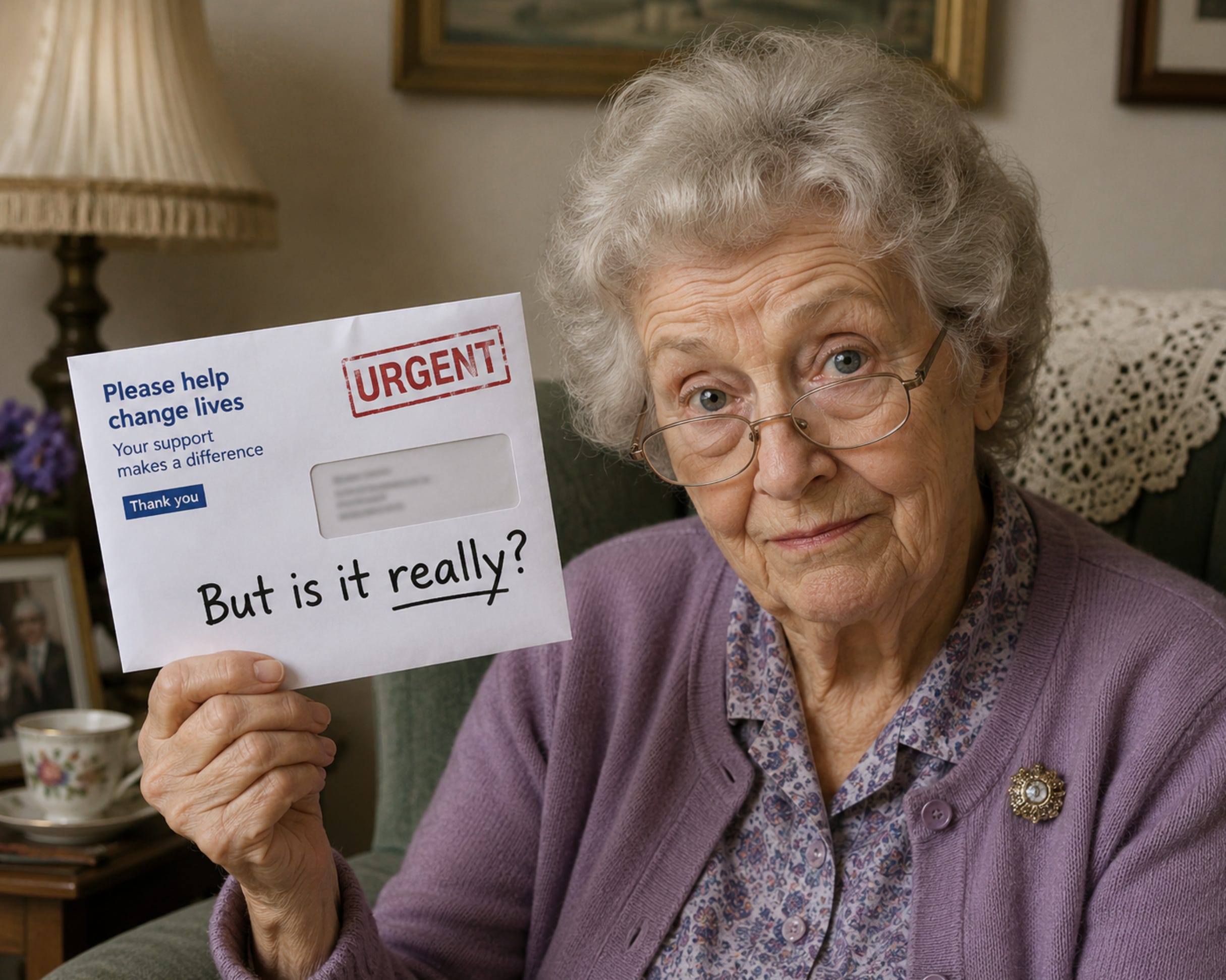
Urgency works. Once. It can give a fantastic boost to an appeal. But if every appeal is the most critical moment in your charity’s history, your donors learn very quickly that none of them are. You’ve trained them to ignore you. Real urgency is a finite resource. Spend it like one.
4. Recropping the photo
A designer decides the image would have “more impact” if it were landscape rather than portrait. The original was a child looking directly at the viewer. The wider crop is the same child, now sitting next to her sister who’s looking off to the right. The original was doing emotional work the wide shot isn’t. The context has changed and so has the pull, all in service of “better” composition. To take this one step further changing a photo from black and white to colour can also damage income. The photo isn’t decoration. It’s half the ask.
5. Turning the CTA into a statement
“Will you give a gift to save the gorilla?” becomes “Gorillas are endangered.” Same sentiment, technically. One asks the donor to do something. The other informs them of a fact they already knew. Questions invite a response. Statements invite a nod and a scroll. If your call to action doesn’t actually call for an action, it’s not a CTA. It’s a caption. I used to have a boss that would always say “so what?” to a statement headline. It was great lesson.
A few more worth watching
Whilst we’re here please don’t forget that the envelope is an exceptionally important piece of real estate. Don’t change it on a whim. Plain versus teaser, window versus no window, stamp versus franking. They are all measurable, all routinely changed by someone who’s never tested any of them. Same goes for the response form. Reorder the ask amounts, change which one’s circled, move Gift Aid before or after the gift, and watch your conversion rate move with it. And then there’s the classic of someone “tidying up” the letter. Shorter paragraphs. PS removed. Underlining gone. The letter now looks beautifully professional and raises half as much. Direct mail isn’t meant to look like a corporate memo. It’s meant to look like a letter.
The pattern
None of these feel like the decision that matters. That’s exactly why they’re so dangerous. If you find yourself in a meeting where someone is about to change one of these things because it “feels stale” or “looks better” or “fits the brand guidelines” ask them what they’re basing it on. If the answer is a ‘vibe', the answer is no.
Psst! Australian and New Zealand Fundraisers.
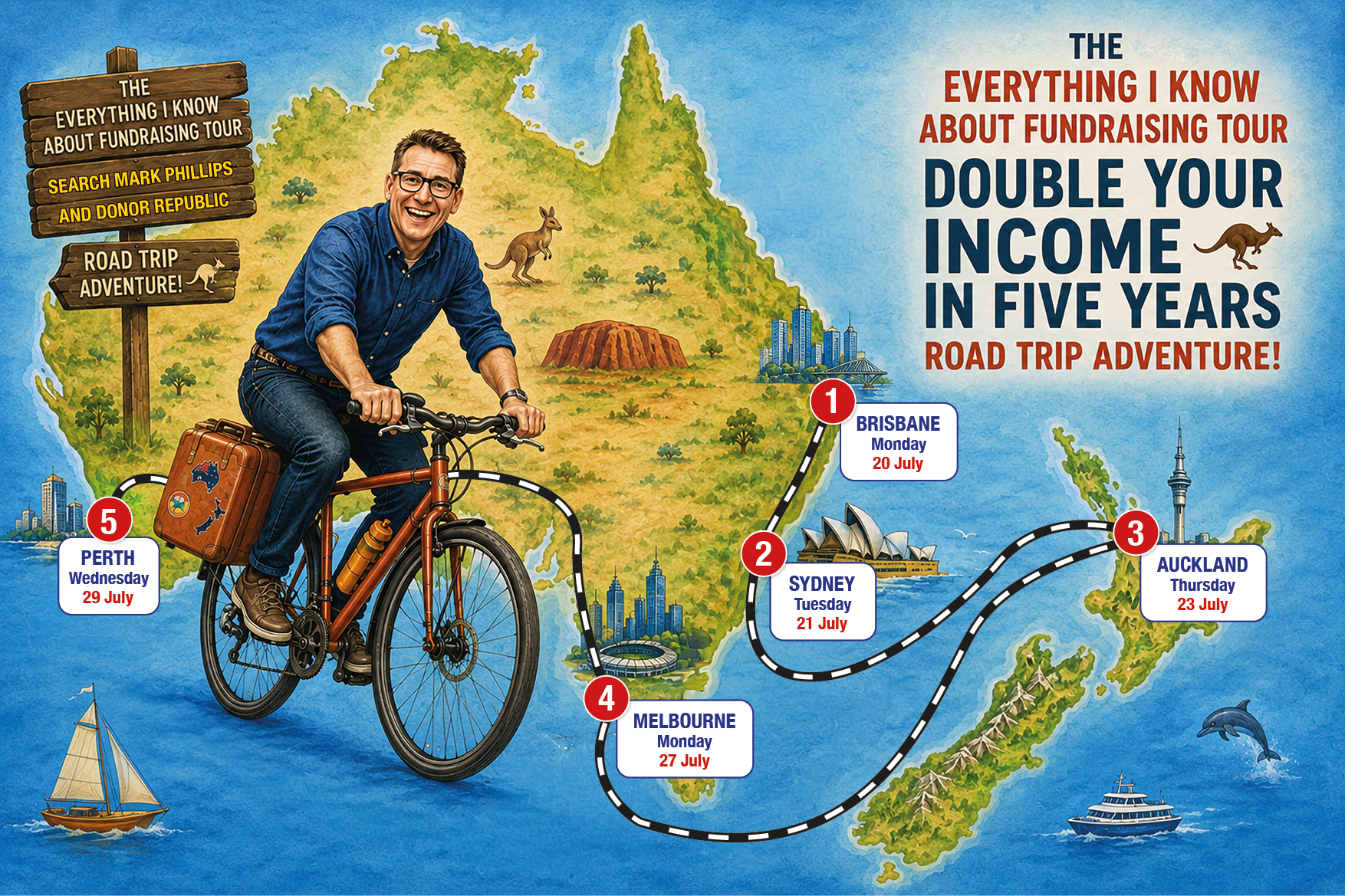
If you want to go deeper on the tactics and strategy behind successful cash, regular giving, mid-value and legacies, come and join me on my Australian road trip with Donor Republic. I’ll be sharing the most important lessons I’ve learned from 37 years in fundraising, designed to give you everything you need to double your income in five years.
I’d love to see you there. All the details can be found by clicking here.
Mark, I love these. And boy, I've experienced them all. Looking at what arrives in my own mailbox, a LOT of nonprofits have these problems. Business letters, not personal ones. Bragging about their good work, not involving the donor... and on and on.
Thank you for this series. It's gold.
More common sense thanks Mark. Would love to know more by PM about no.5 as it's close to home.